Food Commodities
Commodity is “A product or raw material that can be bought or sold”
whereas ingredient is defined as “One of the things from which something is
made especially one of the foods that are used together to make a particular dish.”
Food commodity is referred to those materials or items, which are used in cooking that supplies nutrients to human body.

Q. What commodity
means?
Vegetables
Vegetables are any edible part of a plant with a savory flavor. The meaning of "vegetable" as "plant grown for food" was not established until the 18th century. Some vegetables can be consumed raw, some may be eaten raw or cooked, and some must be cooked in order to be edible. A few vegetables are often used in desserts and other sweet dishes, such as carrot cake.
Uses of Vegetables in diet
·
As
an accompaniment
·
As
pickle and chutneys
·
As
ingredients in soup
·
As
ingredients in sauce
·
As main dish
· As garnish
Q. What happens if you don't eat vegetables?
A. What really happens if you don't eat your vegetables? Without veggies, you're more prone to digestive disorders such as constipation, hemorrhoids, and diverticulitis. Vegetables contain cellulose, which increases stool weight, eases passage, and reduces transit time
Importance of Vegetables in Diet
1.
They
provide Vitamins (Vitamin A,B,C)
2.
They
provide mineral elements such as potassium, phosphorous, calcium, magnesium,
iron
3.
Some
carbohydrates provide energy
4.
Provides
proteins from vegetables like pulses, peas, beans and lentils
5. They provide variety, color, flavor and texture in diet
Composition & Nutritive Value
Vegetables have highly water content, which ranges from 70% to 95% as well as other nutrients such as carbohydrate, protein, vitamin and fat. Squashes, in particular, contain a high percentage of water, while potato contains a great deal of starch. Apart from the water, carbohydrate ranks first in quantity, these may be present in the form of starch, cellulose, sugar, sucrose etc. The quantity depends upon the parts of plants from which the vegetables come and the degree of maturity. Protein accounts for about 1% of a vegetable composition but can be as high as 4% in corn and 8% in legumes.
Vegetables are also a
useful source of vitamins, which can be varied according to the time of the
day, the temperature and when the vegetables were harvested. Sunshine increases
the vitamin C in turnip, which also have more vitamin B if harvested in the
morning. Cabbage grown at 50°F to 60°F (10°C to 15°C) has a greater
concentration of vitamin B and higher nutritive value when freshly harvested.
Food Value
·
Root
Vegetables: Useful in the diet because they contain starch or sugar for energy,
a small but valuable amount of protein, some mineral salts and vitamins, also
useful sources of cellulose and water
·
Green
Vegetables: No food is stored in the leaves, hence little protein and carbohydrate
is found, rich in mineral salt and Vitamins, the greener the leaf the larger
the quantity of vitamins present, Chief mineral salts are calcium, and iron
Vegetable cookery
ü Reasons for
cooking vegetables are to break down their cellulose so that vegetables are
more palatable and digestible. Amount of cellulose
determines its cooking time.
ü Tends to change
the flavor of vegetables. Different methods can make the same vegetables quite
different in texture, flavor and vitamin content. e.g.: Raw and cooked beans.
ü Vegetables are
cooked to change its taste and texture. E.g.: Fries and Mashed Potatoes.
ü Mild flavored
vegetables such as peas, beans, spinach should be cooked as little as possible
to retain as much of their original flavors, colors and nutrients as possible.(Vitamin
C is the principle vitamin which may be lost while cooking because it is water
soluble).
ü The color in the
vegetables are changed by different cooking method (e.g. fries and mash
potatoes) and chemical reaction (e.g. Cauliflower turns whiter if cooked with
little acid/ vinegar).
ü Green vegetables
are green because of the presence of chlorophyll which is destroyed by heat and
acid.
ü Magnesium is the
pigment found in vegetables which is lost while cooking due to which green
turns yellowish (do not cook those vegetables for long Duration).
ü Cook green mild
flavored vegetables to retain the nutrients, color and desirable texture and
flavor using little water.
ü Cook green
vegetables in water with the lid off to allow the escape of volatile acids.
ü Once the
vegetables are cooked, remove vegetables from cooking water to prevent further
cooking.
ü Vegetables with strong flavor may be cooked in a large amount of water to pass strong flavor from the vegetables into the cooking water.(e.g. bamboo shoots, Celery, Leeks, carrots, onions, turnips)
Selection
Points
1.
The
qualities of root vegetables are determined by its firmness. The skin of
carrot, turnip, and radish shouldn’t be wrinkled.
2.
Onion
should have thin and shiny skin with no sprouts.
3.
The
potatoes should be of regular size, firm and free from soil.
4.
Green
vegetable should be crisp, fresh and green.
5.
Cauliflower
should be white & firm.
6.
Pea
pod should be plump.
7.
Cabbage
should be compact and heavy for its size.
8.
Tomatoes
should be firm and bright red with shiny skin.
9. Brinjals should be light for their size, having a shiny and smooth skin
There are few
points that have to be considered while preparing and cooking of vegetable.
·
Do
not let vegetables soak in water unnecessarily.
·
Cook
or bake vegetables with their skin if possible,
·
Keep
air- Oxygen away from the vitamin rich vegetables by covering while cooking. Do
not stir unnecessarily as it mixes air.
·
Cut
the vegetables just before cooking.
·
Baking
powder should not be added while cooking vegetables.
·
When
preparing frozen vegetables, place directly into the boiling water.
Pigments Color
Chlorophyll Green
Flavones White (Becomes
whiter in acid medium)
Carotenoids Yellow/ Orange
Anthocyanin Red
Types of vegetables
Root vegetables: Plant roots
(underground part of a plant) used as vegetables. E.g. Carrots, Turnips,
Beet root, Radish, Horse radish, Celeriac.

Tubers:
Tubers are various types of modified
plant structures that are enlarged to store nutrients. They are used
by plants to survive the winter or dry months and provide energy and
nutrients for re growth during the next growing season and they are a means
of asexual reproduction. Potato, Yam, Manioc, Sweet Potatoes, Artichokes

Bulbs: A bulb is a short stem with
fleshy leaves or leaf bases. The leaves often function
as food storage organs. E.g.
Garlic, Leeks, Onions, Shallots

Leafy Vegetable:Leaf vegetables,
also called potherbs, green vegetables, greens, or leafy greens, are
plant leaves cooked and eaten as a vegetable. E.g. Lettuce,
Cabbage, Spinach, Watercress, Chinese leaves.

Fruits: In the
botanical sense, but used as vegetables. E.g. Tomatoes, Squash, Peas, Pulses,
Pumpkin, Marrow, Avocado, Cucumber.

Stem: Asparagus,
Celery, Cardoon, Endive, mushroom and bamboo shoot

Flowers: Broccoli,
Cauliflower and edible flowers

Fungi: Mushrooms, Morels, Yarsagumba

Basic Cuts of Vegetables
Juliennes:
2.5 mm strips, 3 cm length, Used for garnishing
Brunoise:
1 mm dice, Used for broths and garnishing
Macedoine:
5 mm dices, Used as mixed vegetables
Jardinière:
Batons, 5x5x25 mm, Mixed vegetable
Paysanne:
Circles, Triangles, Rectangles, Squares, Used in unsurpassed soups
Chateaux:
Barrel shape
The Food Production department or Kitchen make a wide variety of dishes, and the chefs working the kitchen should be very familiar with the different variety of cuts used in the advance culinary preparation. The below mentioned types of knife of cuts acts as the base for kitchen preparation and is called the 'Classical Cuts' / 'Classical Vegetable Cuts' / 'Basic Knife Cuts'.
1) Allumete Cut (Matchstick)
Dimension - 1/16'' X 1/16'' X 2''

2) Julienne Cut (Double Matchstick)
Dimension - 1/8'' X 1/4'' X 2''

3) Batonette Cut (French Fry Cut)
Dimension - 1/4'' X 1/4'' X 2''
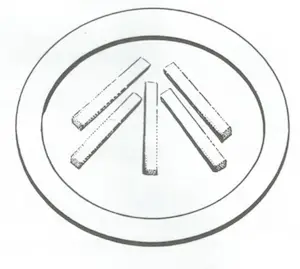
4) Brunoise Cut (Square Allumete)
Dimension - 1/16'' X 1/16'' X 1/16''

5) Macedoine Cut (Square Julienne)
Dimension - 1/8'' X 1/8'' X 1/8''

6) Small Dice (Squar Baton)
Dimension - 1/4'' X 1/4'' X 1 / 4''
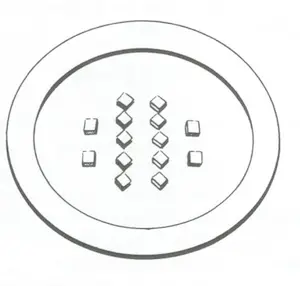
7) Medium Dice
Dimension - 1/2'' X 1/2'' X 1/2''
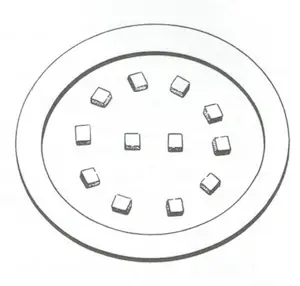
8) Large Dice
Dimension - 3/4'' X 3/4'' X 3/4''

9) Slice
To Cut into uniform cross cuts, Example Slicing Onions

10) Paysanne
1/2'' diameter spheres or triangles.

11) Parisienne
Round Shaped cut.
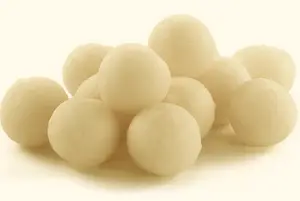
12) Olivette
Olive Shaped Cut.

13) Noisette / Toulenee / Turned
Small seven sided barrel.

14) Chateau
Large Sever Sided Barrel.
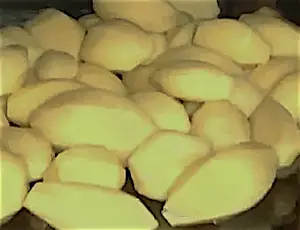
15) Concasse
Roughly Chopped

16) Chop / Chopping
Cut into irregularly shaped pieces.
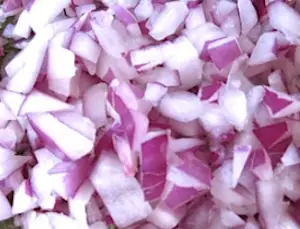
17) Mincer
Chopping into very fine pieces.
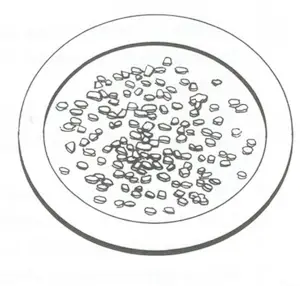
18) Emincer
Cutting into very thin slices.
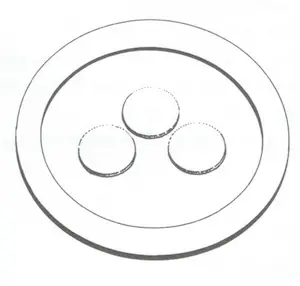
19) Sherd
Cutting into very thin strips, eg: Shedding Cabbage


No comments:
Post a Comment